


What role does the refractive index of high-quality crystal play in maximizing the luminous impact of a French chandelier within a dimly lit environment?
Release Time : 2026-04-15
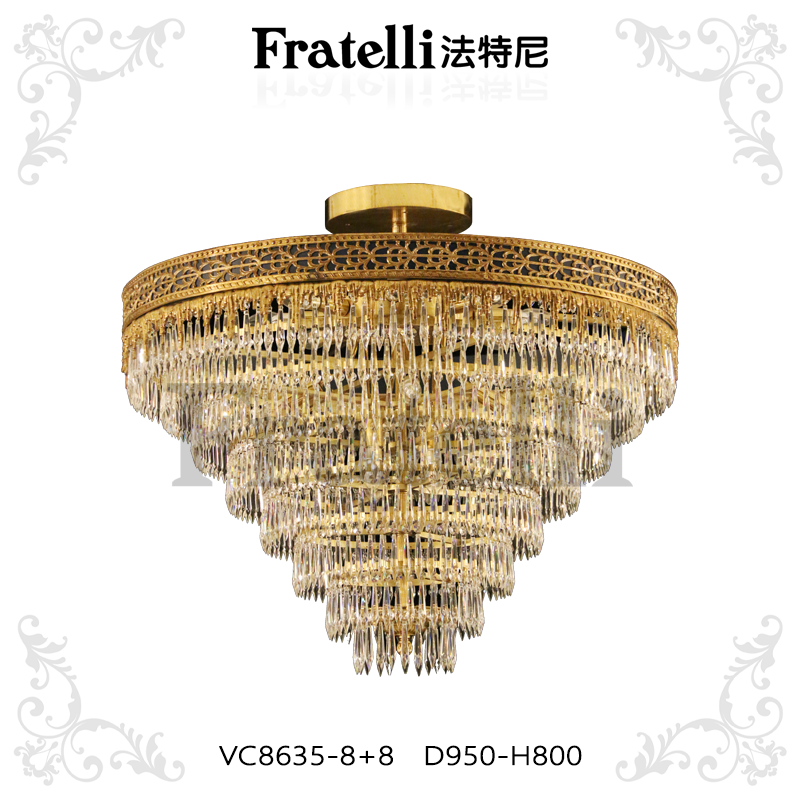
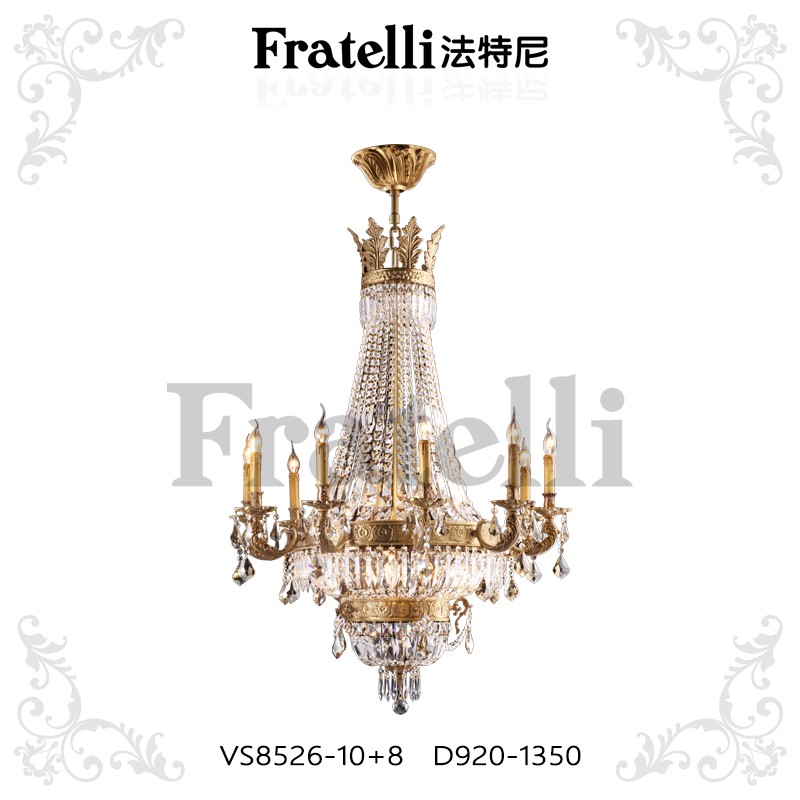
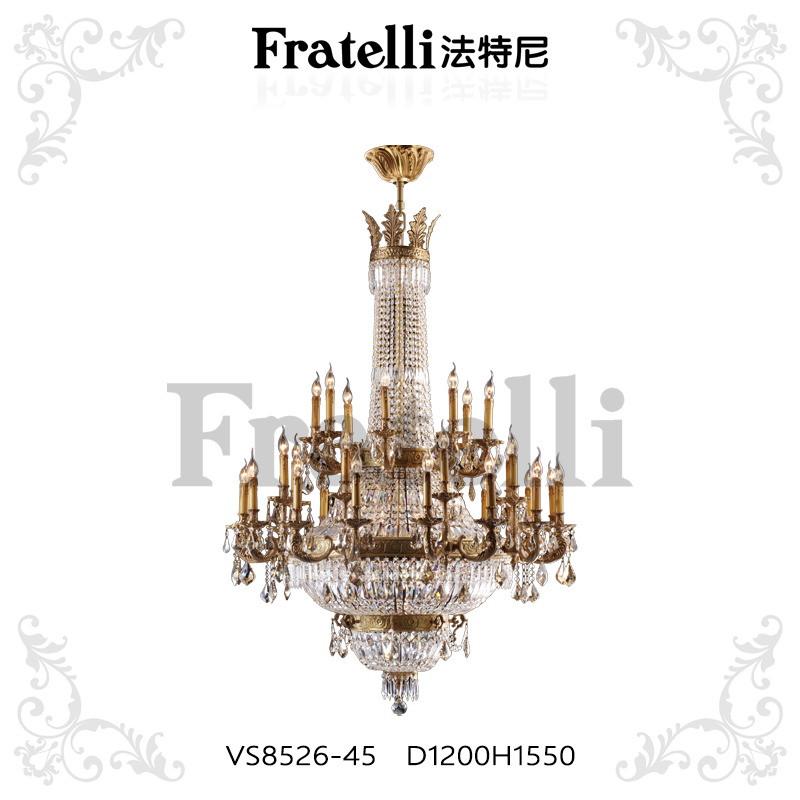
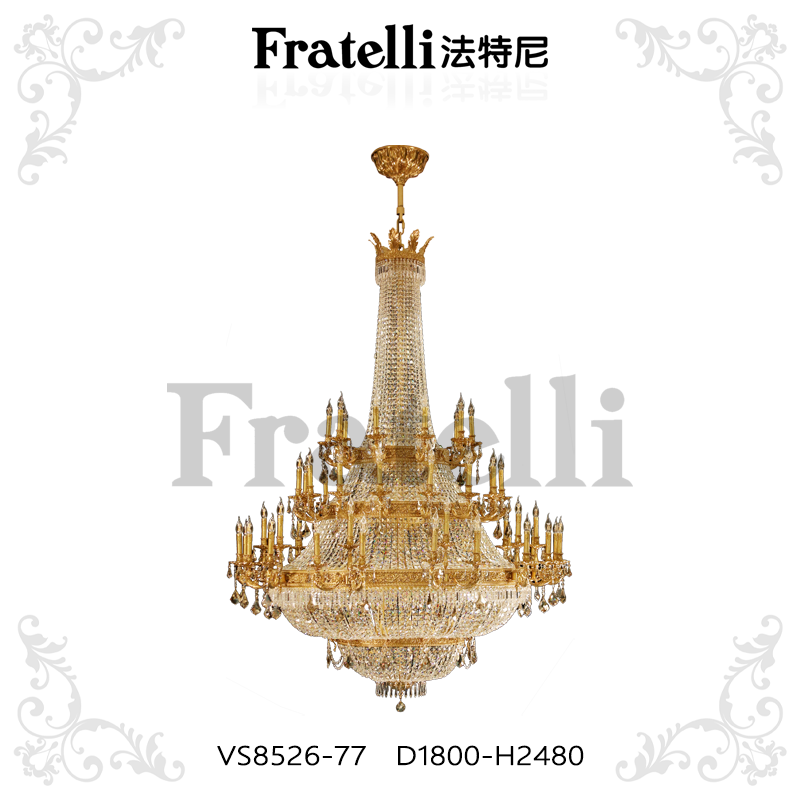
The French chandelier stands as a preeminent symbol of luxury and architectural grandeur, a lighting fixture designed not merely to illuminate a space but to define it. In the context of interior design, particularly within dimly lit environments such as formal dining rooms, grand foyers, or intimate lounges, the chandelier serves as a focal point that commands attention. However, the visual splendor of these fixtures is not solely derived from the number of light bulbs or the intricacy of the metalwork. The true magic lies in the optical properties of the materials used, specifically the high-quality crystal components. The refractive index of these crystals is the fundamental physical characteristic that transforms a simple light source into a dazzling display of brilliance, fire, and luminosity, creating an atmosphere of opulence that is central to the French aesthetic.
To understand the role of the refractive index, one must first look at the physics of light as it interacts with matter. When a ray of light travels from a medium of low optical density, such as air, into a medium of higher density, such as glass or crystal, it slows down and changes direction. This bending of light is known as refraction. The refractive index is a numerical value that quantifies this bending capability. Standard glass typically has a refractive index of around 1.5, whereas high-quality lead crystal, often used in fine French chandeliers, boasts a refractive index ranging from 1.54 to over 1.7, depending on the lead oxide content. This seemingly small numerical difference has a profound impact on visual performance. The higher the refractive index, the more sharply the light is bent as it enters and exits the crystal, allowing for a greater manipulation of the light path.
In a dimly lit environment, the efficiency of light usage is paramount. A fixture that absorbs light or allows it to pass through without modification will appear dull and flat. High-quality crystal, with its elevated refractive index, acts as a powerful optical lens. As light enters the crystal prism, it is slowed significantly and bent at acute angles. This process maximizes the internal reflection of the light, bouncing it around inside the crystal before directing it back out toward the observer. This phenomenon ensures that even a low-wattage light source can appear intensely bright and vibrant. The crystal effectively captures every photon emitted by the bulb and redistributes it, preventing the light from being lost to the surrounding darkness and ensuring that the fixture itself becomes a radiant object.
Beyond simple brightness, the high refractive index is responsible for "fire" or dispersion, which is the separation of white light into its spectral colors. Because the refractive index varies slightly for different wavelengths of light, the crystal bends red, orange, yellow, green, blue, indigo, and violet light at different angles. As the light exits the crystal, it fans out into a miniature rainbow. In a French chandelier, which may feature hundreds of individual prisms, this effect is multiplied exponentially. In a dimly lit room, where the human eye is more sensitive to contrast and points of interest, these flashes of spectral color create a dynamic, living quality to the light. The room is not just illuminated; it is painted with shifting patterns of color that dance across the walls and ceiling, adding depth and texture to the space.
The cut and geometry of the crystal are designed specifically to exploit this high refractive index. French chandeliers often utilize specific shapes, such as the "poire" (pear) or "balle" (ball), which are faceted with mathematical precision. These facets act as a series of mirrors and lenses. If the material had a low refractive index, light would pass through these facets without significant deviation, rendering the cut invisible. However, with high-index lead crystal, the light strikes the internal facets and undergoes total internal reflection, shooting back out through the front of the crystal with renewed intensity. This interaction creates the signature "sparkle" associated with luxury lighting. It is this sharp, diamond-like scintillation that distinguishes a genuine crystal chandelier from a standard glass fixture, particularly in low-light conditions where nuance is key.
Furthermore, the optical clarity of high-quality crystal complements its refractive properties. High lead content not only increases the refractive index but also reduces impurities, resulting in a material of exceptional transparency. In a dimly lit setting, clarity is essential for maintaining the brilliance of the light. Cloudy or impure glass would scatter light diffusely, creating a hazy glow rather than a sharp, brilliant sparkle. The pristine clarity of French crystal ensures that the light travels unimpeded until it hits a faceted surface, where it is then dramatically redirected. This combination of high transparency and high refraction allows the chandelier to function as a complex optical instrument, sculpting the light into a form that is both aesthetically pleasing and functionally effective.
The psychological impact of this optical phenomenon should not be underestimated. In a dimly lit environment, the human brain craves visual stimulation. The high refractive index of the crystal provides this by creating points of high contrast and intense brightness. The way the crystal captures and manipulates light creates a sense of warmth and intimacy, yet also of grandeur and formality. It draws the eye upward, emphasizing the height of the ceiling and the volume of the room. The interplay of light and shadow, governed by the physics of refraction, turns the chandelier into a kinetic sculpture, where the light appears to move and change even when the fixture is stationary.
Ultimately, the refractive index is the secret ingredient that elevates a French chandelier from a functional object to a masterpiece of design. It is the physical property that allows the fixture to maximize the potential of every watt of electricity, transforming raw energy into an emotional experience of light. By bending, splitting, and reflecting light with precision and brilliance, high-quality crystal ensures that the chandelier remains the heart of the room, casting a spell of elegance that defines the very essence of French luxury.
To understand the role of the refractive index, one must first look at the physics of light as it interacts with matter. When a ray of light travels from a medium of low optical density, such as air, into a medium of higher density, such as glass or crystal, it slows down and changes direction. This bending of light is known as refraction. The refractive index is a numerical value that quantifies this bending capability. Standard glass typically has a refractive index of around 1.5, whereas high-quality lead crystal, often used in fine French chandeliers, boasts a refractive index ranging from 1.54 to over 1.7, depending on the lead oxide content. This seemingly small numerical difference has a profound impact on visual performance. The higher the refractive index, the more sharply the light is bent as it enters and exits the crystal, allowing for a greater manipulation of the light path.
In a dimly lit environment, the efficiency of light usage is paramount. A fixture that absorbs light or allows it to pass through without modification will appear dull and flat. High-quality crystal, with its elevated refractive index, acts as a powerful optical lens. As light enters the crystal prism, it is slowed significantly and bent at acute angles. This process maximizes the internal reflection of the light, bouncing it around inside the crystal before directing it back out toward the observer. This phenomenon ensures that even a low-wattage light source can appear intensely bright and vibrant. The crystal effectively captures every photon emitted by the bulb and redistributes it, preventing the light from being lost to the surrounding darkness and ensuring that the fixture itself becomes a radiant object.
Beyond simple brightness, the high refractive index is responsible for "fire" or dispersion, which is the separation of white light into its spectral colors. Because the refractive index varies slightly for different wavelengths of light, the crystal bends red, orange, yellow, green, blue, indigo, and violet light at different angles. As the light exits the crystal, it fans out into a miniature rainbow. In a French chandelier, which may feature hundreds of individual prisms, this effect is multiplied exponentially. In a dimly lit room, where the human eye is more sensitive to contrast and points of interest, these flashes of spectral color create a dynamic, living quality to the light. The room is not just illuminated; it is painted with shifting patterns of color that dance across the walls and ceiling, adding depth and texture to the space.
The cut and geometry of the crystal are designed specifically to exploit this high refractive index. French chandeliers often utilize specific shapes, such as the "poire" (pear) or "balle" (ball), which are faceted with mathematical precision. These facets act as a series of mirrors and lenses. If the material had a low refractive index, light would pass through these facets without significant deviation, rendering the cut invisible. However, with high-index lead crystal, the light strikes the internal facets and undergoes total internal reflection, shooting back out through the front of the crystal with renewed intensity. This interaction creates the signature "sparkle" associated with luxury lighting. It is this sharp, diamond-like scintillation that distinguishes a genuine crystal chandelier from a standard glass fixture, particularly in low-light conditions where nuance is key.
Furthermore, the optical clarity of high-quality crystal complements its refractive properties. High lead content not only increases the refractive index but also reduces impurities, resulting in a material of exceptional transparency. In a dimly lit setting, clarity is essential for maintaining the brilliance of the light. Cloudy or impure glass would scatter light diffusely, creating a hazy glow rather than a sharp, brilliant sparkle. The pristine clarity of French crystal ensures that the light travels unimpeded until it hits a faceted surface, where it is then dramatically redirected. This combination of high transparency and high refraction allows the chandelier to function as a complex optical instrument, sculpting the light into a form that is both aesthetically pleasing and functionally effective.
The psychological impact of this optical phenomenon should not be underestimated. In a dimly lit environment, the human brain craves visual stimulation. The high refractive index of the crystal provides this by creating points of high contrast and intense brightness. The way the crystal captures and manipulates light creates a sense of warmth and intimacy, yet also of grandeur and formality. It draws the eye upward, emphasizing the height of the ceiling and the volume of the room. The interplay of light and shadow, governed by the physics of refraction, turns the chandelier into a kinetic sculpture, where the light appears to move and change even when the fixture is stationary.
Ultimately, the refractive index is the secret ingredient that elevates a French chandelier from a functional object to a masterpiece of design. It is the physical property that allows the fixture to maximize the potential of every watt of electricity, transforming raw energy into an emotional experience of light. By bending, splitting, and reflecting light with precision and brilliance, high-quality crystal ensures that the chandelier remains the heart of the room, casting a spell of elegance that defines the very essence of French luxury.