


Does the cutting process of French Chandelier crystal decorative parts affect their refractive effect?
Release Time : 2026-04-02
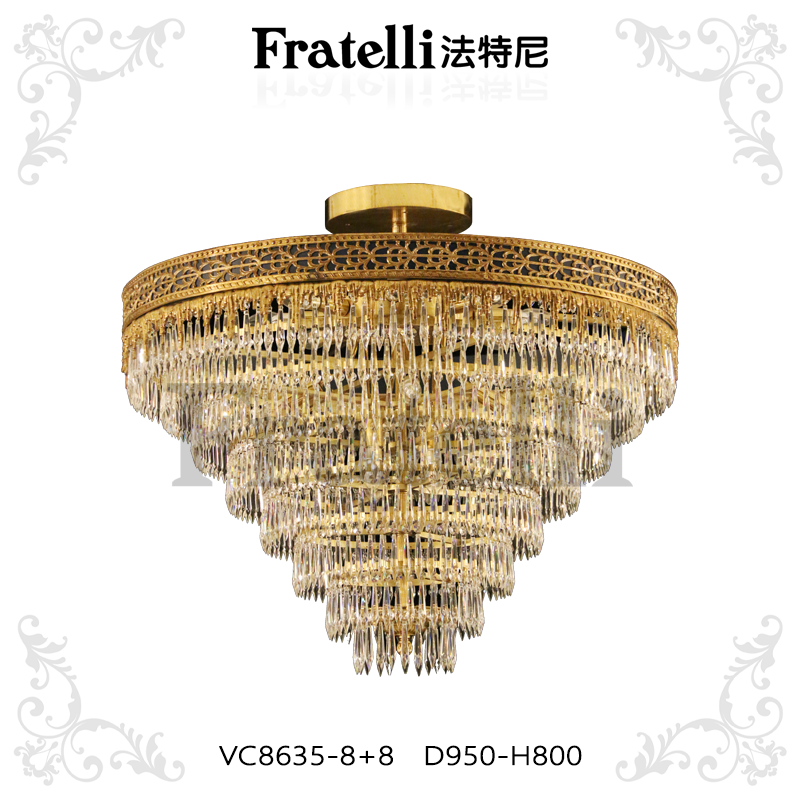
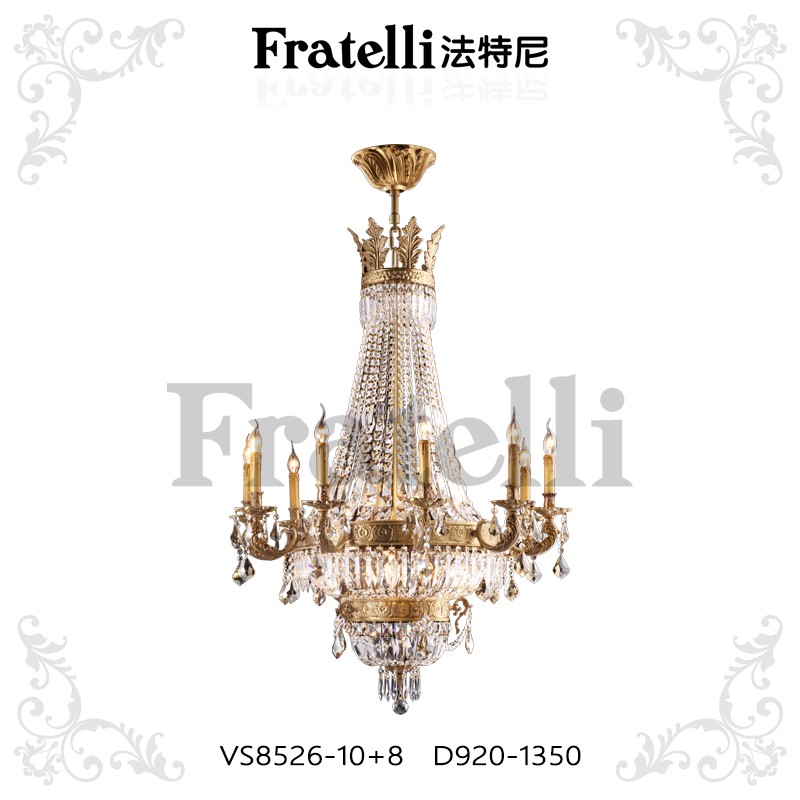
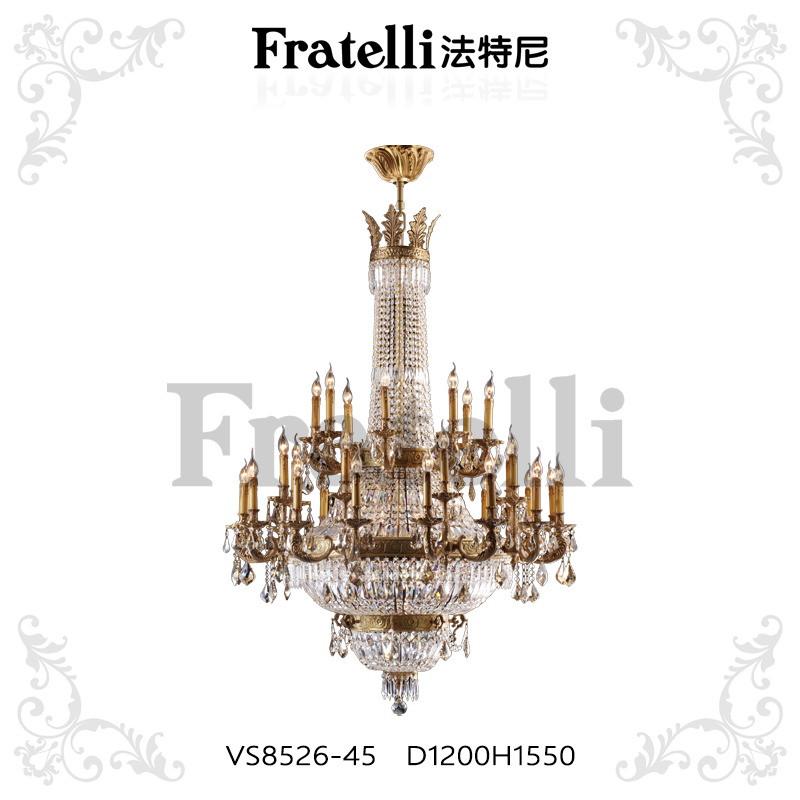
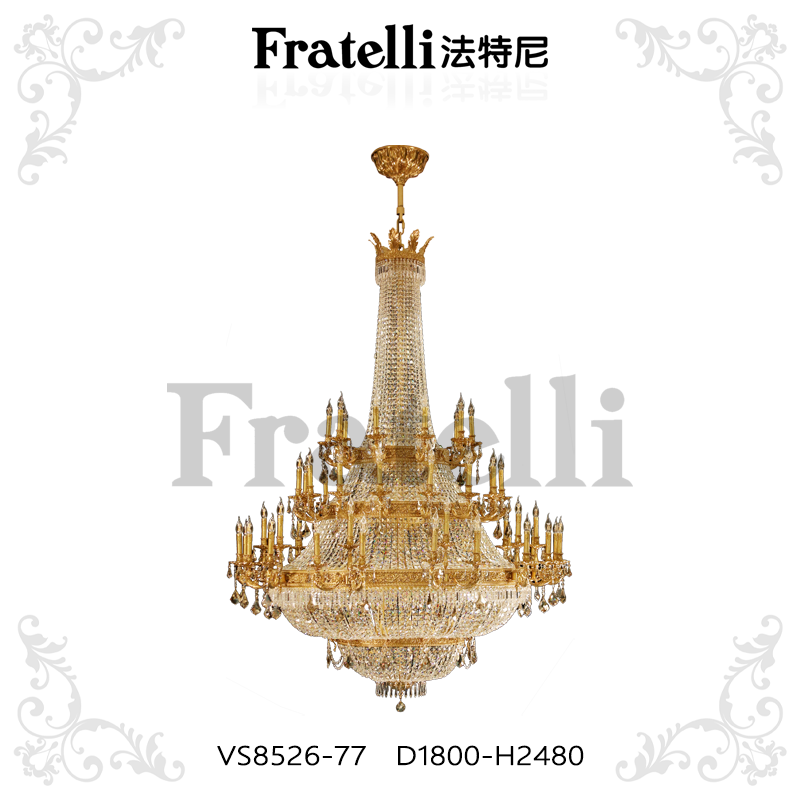
French Chandelier's crystal decorative components have always been a visual focal point in any space. Their dazzling brilliance and dynamic interplay of light and shadow stem not only from the inherent properties of crystal itself but also from the exquisite precision of their cutting techniques. The impact of cutting on the crystal's refraction is reflected in the precise control of light propagation paths, the delicate shaping of light spots, and the creation of a layered overall lighting effect—a core pillar of French Chandelier's aesthetic value.
The principle of crystal refraction is the physical phenomenon where light, entering a crystal medium from air, is deflected due to changes in speed. Natural crystal or high-lead glass, due to their high lead content, has a refractive index far exceeding that of ordinary glass. When light passes through, it undergoes multiple refractions, reflections, and dispersions at the cut facets, breaking down white light into a rainbow spectrum. This process is not arbitrary but relies on the precise design of the angles and number of facets—the more facets and the more precise the angles, the more thorough the light decomposition, the finer and more dynamic the light spots, and the more pronounced the refraction effect. French Chandelier crystal components often employ a multi-faceted cutting technique, using complex geometry to expand the light-receiving surface and enhance the refraction path, making each beam of light a "narrator" of light.
The angle of the facets is a key parameter determining the refraction effect. When light passes through a crystal facet at a specific angle of incidence, total internal reflection occurs, confining the light within the crystal and refracting it repeatedly until it exits at a specific angle. French Chandelier crystal cutting often follows the principle of optical critical angles, maximizing light output through precise cuts of around 42°, preventing light from directly penetrating due to excessively large angles of incidence, which would weaken the refraction effect. This strict control over angles allows crystal components to form soft, well-defined, subtly haloed light spots under light, avoiding glaring direct light while preserving the penetrating power of light, creating a unique atmosphere of "layered light, a sense of breathability."
The number of facets directly affects the shape and density of the light spots. French Chandelier's crystal components often feature 8-16 or even more facets, each acting like a miniature prism, breaking light down into tiny specks. As light passes through the multi-layered, cascading crystal structure, the light from different facets overlaps, creating flowing starlight and ripple-like light and shadow, imbuing the space with dynamic beauty. For example, in a high-ceilinged living room, the light from a French crystal chandelier, refracted repeatedly through dozens of facets, descends like a soft mist, casting dancing spots of light on the walls and floor, enhancing the sense of depth and three-dimensionality.
The precision of the cutting process is also reflected in the deep utilization of the crystal's inherent properties. High-purity, low-stress crystal, with fewer impurities and a uniform internal structure, can more stably present a warm, non-glaring diffused light. French Chandelier's crystal components often use K9 grade crystal or Austrian-cut crystal, hand-polishing to ensure smooth, flawless facets, preventing light scattering due to surface roughness and resulting in a cloudy effect. This dual control over materials and craftsmanship allows the crystal components to exhibit a luster reminiscent of "melted amber" under light, both dazzling and elegant.
French Chandelier's design logic is precisely based on the optical properties of the cutting process. A multi-layered, cascading structure expands the incident surface, a diamond-cut array enhances the refraction path, and the copper frame, treated with an aging process, reduces reflective interference, making the light more "deep" and "smooth." This design transforms the chandelier from a mere lighting tool into a medium for sculpting light—in a dining room, warm light, refracted and diffused by the crystal, illuminates plates with a delicate sheen, making even the food appear more appetizing; in a bedroom, the obliquely cast warm light creates dappled edges as pages are turned, creating a warm and tranquil reading atmosphere.
From the domed crystal chandelier of the Comédie-Française in Paris to the French-style light luxury chandeliers in modern homes, the cutting process has always been the core guarantee of the crystal's refractive effect. By precisely controlling the path of light propagation, it transforms the language of electric light sources into a gentle, layered, and breathable narrative of light, making the French Chandelier a "floating work of art" in the space. Whether it is the decorative beauty when not powered on or the magic of light and shadow when lit, the cutting process allows the crystal components to transcend the material itself, becoming a perfect combination of French aesthetics and optical science.