


How does the shape of the French Chandelier lampshade affect the distribution of light?
Release Time : 2025-12-26
The shape of the French Chandelier lampshade is a core design element in light distribution. Its form, material, and structure not only determine the path of light projection but also imbue the space with a unique artistic temperament through the layering of light and shadow. This design blends functionality and aesthetic pursuit, making the French Chandelier a visual focal point for creating atmosphere.
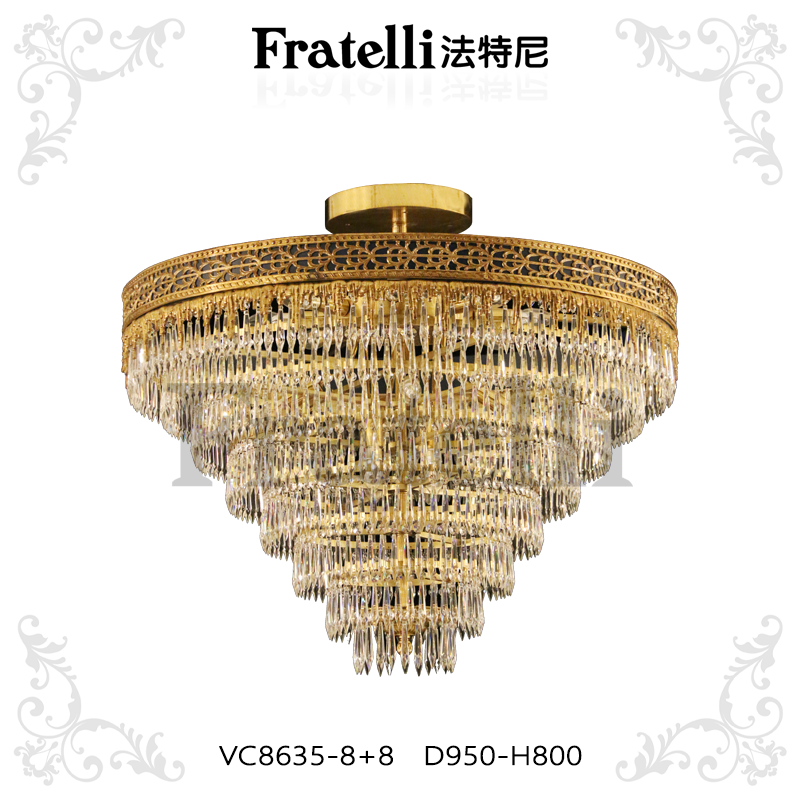
The shape of the French Chandelier lampshade directly influences the way light diffuses through its geometric form. For example, the classic bud-shaped lampshade uses curved leaves to wrap the light source, creating a gradient halo after multiple refractions, as warm and soft as a naturally blooming flower. This design avoids the glare of direct light, allowing the light to cover the space more evenly, making it especially suitable for areas like living rooms or dining rooms that require a warm atmosphere. Conical lampshades, on the other hand, concentrate light downwards through narrow openings, creating a clear boundary of the light field. They are often used above dining tables or workbenches, satisfying functional lighting needs while enhancing the sense of spatial layering through the contrast of light and shadow.
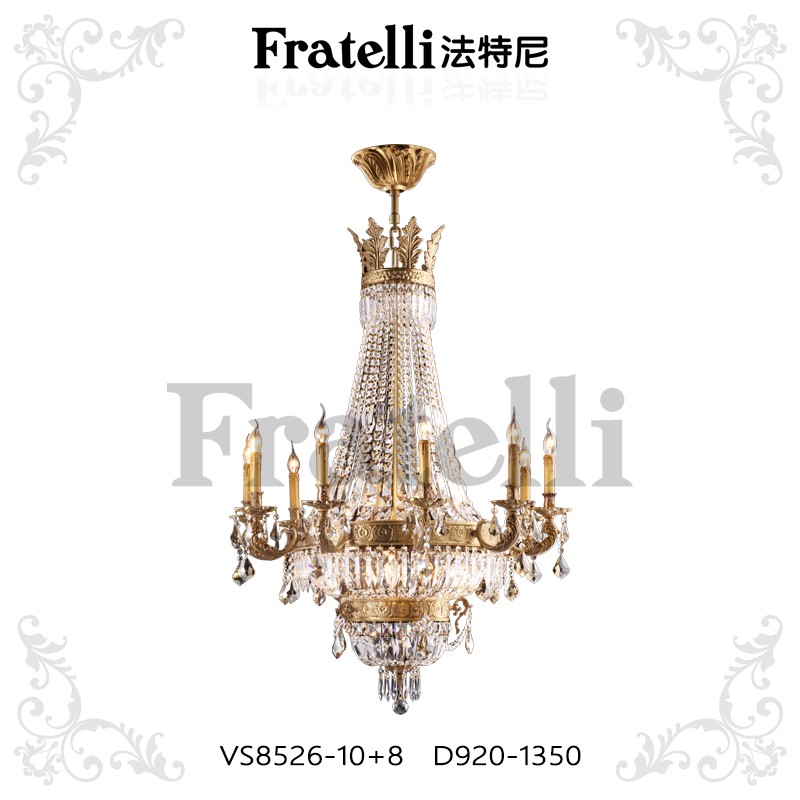
The choice of materials further enriches the expressiveness of light. Glass lampshades are a classic element of French Chandelier, their transparent or frosted textures producing drastically different effects: transparent glass allows light to pass through directly, creating sharp light and shadow outlines, perfect for pairing with crystal pendants to enhance refraction; frosted glass softens light through its surface particles, creating a hazy, diffused halo, similar to the warm texture of fabric lampshades. Fabric lampshades, characterized by the texture of natural fibers, create subtle changes in brightness as light filters through the fabric, as if gently filtered. This design creates a relaxed and comfortable atmosphere in bedrooms or relaxation areas.
The layered structure of lampshades allows for more precise control of light distribution. Multi-layered lampshade designs, through the combination of different materials, create complex light and shadow interactions. For example, an outer layer uses a perforated metal frame, while the inner layer is made of translucent glass or sheer fabric. Light undergoes multiple refractions and reflections as it passes through, creating rich layers of light and shadow. This design not only enhances the three-dimensionality of the space but also gives static lighting fixtures vitality through the dynamic changes in light and shadow. Some French chandelier designs incorporate pleats or wavy trim along the edges of the lampshade, creating a natural transition of light and shadow as the light flows along the curved surface, further enhancing the romantic and elegant visual effect.
The direction and angle of the lampshade's opening determine the range of light projection. Open lampshades allow light to diffuse freely in all directions, suitable for creating general lighting effects; semi-enclosed lampshades, by blocking part of the light, create directional projection from above or below, often used to highlight wall decorations or floor textures. For example, upward-opening lampshades can reflect light to the ceiling, reducing the feeling of spatial oppression through indirect lighting; downward-opening lampshades focus light on the lower area, suitable for scenarios requiring concentrated lighting, such as reading or craft activities.
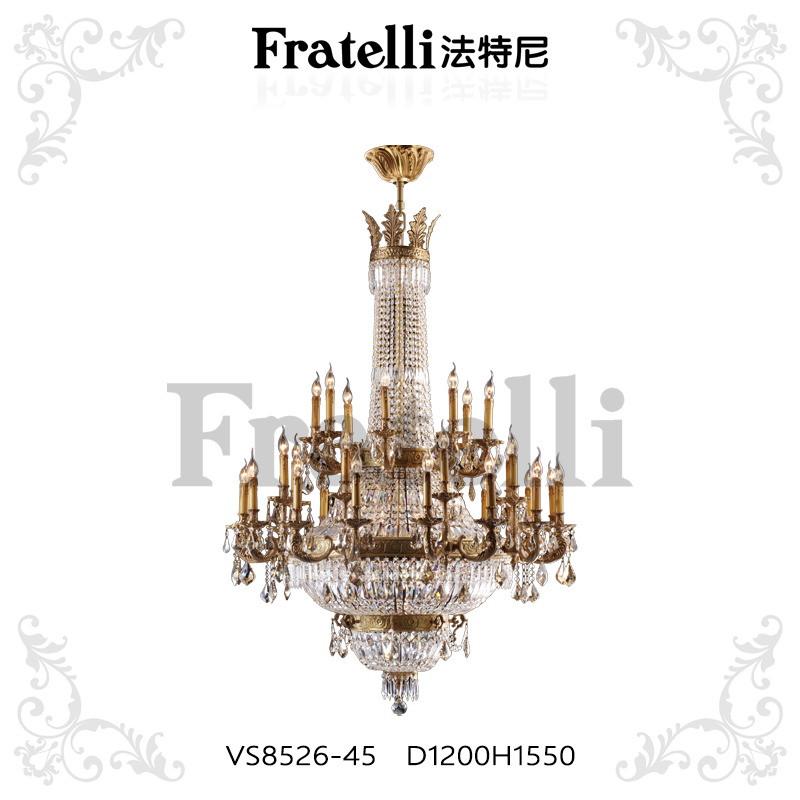
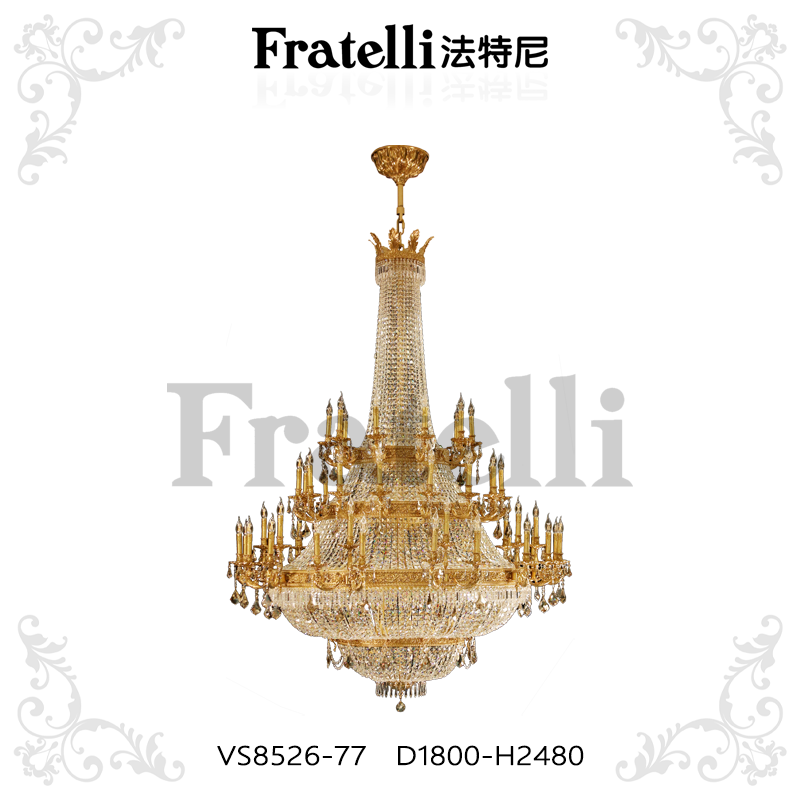
The shape of French chandelier lampshades is also closely related to the scale of the space. In living rooms with high ceilings, large crystal chandeliers, through the layering and dangling of multiple lampshades, enhance the sense of depth; while in small apartments or spaces with low ceilings, simple spherical or dish-shaped lampshades avoid visual crowding and enhance the sense of spaciousness through even light distribution. The size and proportion of the lampshade must be coordinated with the overall design of the light fixture. An overly large lampshade may lower the perceived height of a space, while an overly small one will fail to create a visual focal point.
From a color psychology perspective, the color of French Chandelier lampshades is crucial in shaping the lighting atmosphere. Light-colored lampshades, such as off-white and pale yellow, reflect more light, making the space appear bright and open; dark-colored lampshades, such as bronze and dark green, absorb some light, creating a calm and private atmosphere. Some designs also feature a gold or silver reflective coating on the inner wall of the lampshade, enhancing light refraction through a mirror effect and elevating the fixture's luxurious feel.
French Chandelier's lampshade designs achieve precise control of light distribution through a comprehensive design of form, material, structure, direction, and color. They not only meet basic lighting needs but also perfectly blend functionality and decoration through the artistic expression of light and shadow, becoming an indispensable visual symbol of French style. Whether it's the luxurious intricacy of classical palaces or the simple elegance of modern light luxury, the lampshade design has always been a key vehicle for French Chandelier to convey romantic temperament and artistic soul.